

Wednesday, 30 March 2016

Tuesday, 15 December 2015

Saturday, 12 December 2015
Wednesday, 9 December 2015
ಬೆಂಗಳೂರು: ನಗರಕ್ಕೆ ವಿದ್ಯುತ್ ಪೂರೈಕೆ ಆರಂಭವಾಗಿ 110 ವರ್ಷಗಳಾದ ಹಿನ್ನೆಲೆಯಲ್ಲಿ ಬೆಸ್ಕಾಂ ಪ್ರಧಾನ ಕಚೇರಿಯಲ್ಲಿ ಬುಧವಾರ ಸಂಭ್ರಮಾಚರಣೆ ನಡೆಸಲಾಯಿತು.
ನಗರಕ್ಕೆ ವಿದ್ಯುತ್ ಪೂರೈಕೆ ಆರಂಭವಾದ ಕಥೆಯೇ ಆಸಕ್ತಿಕರ. ಅಂದು ಉತ್ಪಾದಿಸಲಾಗುತ್ತಿದ್ದ ವಿದ್ಯುತ್ ಸಂಪೂರ್ಣವಾಗಿ ಬಳಕೆಯಾಗುತ್ತಿದುದು ಕೋಲಾರದ ಚಿನ್ನದ ಗಣಿಗಳಿಗೆ. ಶಿವನಸಮುದ್ರದ ಯೋಜನೆ ಎರಡನೇ ಹಂತಕ್ಕೆ ವಿಸ್ತರಣೆಯಾದಾಗ ಚಿನ್ನದ ಗಣಿಗಳಿಗೆ ಅಗತ್ಯ ಇರುವುದಕ್ಕಿಂತ ಹೆಚ್ಚಿನ ಪ್ರಮಾಣದ ವಿದ್ಯುತ್ ಲಭ್ಯವಾಗಲಾರಂಭಿಸಿತು.
ಆಗ ಮೈಸೂರು ಸರ್ಕಾರದ ಉಪ ಮುಖ್ಯ ಎಂಜಿನಿಯರ್ ಆಗಿದ್ದ ಎ.ಸಿ.ಜೆ. ಲಾಬಿನ್ ಅವರು ಸರ್ಕಾರದ ಆರ್ಥಿಕ ತಜ್ಞರಿಗೆ ಪ್ರಸ್ತಾವ ಸಲ್ಲಿಸಿದರು. ‘ಬೆಂಗಳೂರಿನ ಜನರು ವಿದ್ಯುತ್ ಪಡೆಯಲು ಆಸಕ್ತರಾಗಿದ್ದು, ಹೆಚ್ಚುವರಿ ವಿದ್ಯುತ್ತನ್ನು ಬೆಂಗಳೂರಿಗೆ ನೀಡಬೇಕು’ ಎಂದು ಅವರು ಪ್ರಸ್ತಾವದಲ್ಲಿ ತಿಳಿಸಿದ್ದರು. ‘ಚಿನ್ನದ ಗಣಿಗಳು ಬಹುಕಾಲ ಬಾಳಲಾರವು. ಬೆಂಗಳೂರಿಗೆ ವಿದ್ಯುತ್ ಕೊಟ್ಟರೆ ಕೈಗಾರಿಕೆಗಳು ಆರಂಭಗೊಳ್ಳುತ್ತವೆ. ಇದರಿಂದ ಸರ್ಕಾರಕ್ಕೆ ಹೆಚ್ಚಿನ ಆದಾಯ ಬರುತ್ತದೆ’ ಎಂದು ಅವರು ಉಲ್ಲೇಖಿಸಿದ್ದರು. ಈ ಪ್ರಸ್ತಾವಕ್ಕೆ ಮೈಸೂರು ಮಹಾರಾಜರು 1904ರ ಮೇ 30ರಂದು ಮಂಜೂರಾತಿ ನೀಡಿದರು.
ನಗರಕ್ಕೆ ವಿದ್ಯುತ್ ಒದಗಿಸಲೆಂದು 35 ಸಾವಿರ ವೋಲ್ಟ್ನ 57 ಮೈಲುದ್ದದ ಏಕಮಾರ್ಗವನ್ನು ಶಿವನಸಮುದ್ರದಿಂದ ನಿರ್ಮಿಸಲಾಯಿತು. ಅಂದಿನ ಕಾಲಕ್ಕೆ ಈ ಯೋಜನೆಗೆ ತಗುಲಿದ ವೆಚ್ಚ ₹7.46 ಲಕ್ಷ.
ನಗರದ ಕೋಟೆ ಸಮೀಪ ‘ಎಂ’ ಸ್ಥಾವರ ಎಂಬ ಹೆಸರಿನಲ್ಲಿ ಅಗತ್ಯ ಕಟ್ಟಡ ನಿರ್ಮಿಸಲಾಯಿತು. ಈ ಪ್ರಸರಣ ಮಾರ್ಗಕ್ಕೆ ಕೆಜಿಎಫ್ನಂತೆ ಮರದ ಕಂಬಗಳನ್ನು ಬಳಸದೆ ಉಕ್ಕಿನ ಕಂಬಗಳನ್ನು ಬಳಸಲಾಯಿತು. ಹೀಗೆ 1905ರ ಆಗಸ್ಟ್ 5ರಂದು ನಗರಕ್ಕೆ ಬೆಳಕು ಬಂದಿತು.
ದೇಶದಲ್ಲಿ ಜಲವಿದ್ಯುತ್ ಪಡೆದ ಪ್ರಮುಖ ನಗರಗಳಲ್ಲಿ ಮೊದಲನೆಯದು ಎಂಬ ಖ್ಯಾತಿಗೆ ಬೆಂಗಳೂರು ಪಾತ್ರವಾಯಿತು. ವಿದ್ಯುತ್ ಸಂಪರ್ಕ ಕಲ್ಪಿಸಲು ಮೊದಲ ವರ್ಷ ತಗುಲಿದ ವೆಚ್ಚ ₹5.86 ಲಕ್ಷ. ಆದರೆ, ಆ ವರ್ಷ ಬಂದ ಆದಾಯ ₹36,476.
ವಿದ್ಯುತ್ ಬರುವ ಮೊದಲು ಬೀದಿದೀಪಗಳು ಇರಲಿಲ್ಲವೇ ಎಂಬ ಪ್ರಶ್ನೆ ಮೂಡುವುದು ಸಹಜ. ದಾಖಲೆಗಳ ಪ್ರಕಾರ 1905ರ ಹೊತ್ತಿಗೆ ನಗರದಲ್ಲಿ ಸೀಮೆಎಣ್ಣೆಯ ಲಾಂದ್ರ ಕಂಬಗಳಿದ್ದವು. ಪ್ರತಿದಿನ ಸಂಜೆ ಈ ದೀಪಗಳನ್ನು ಉರಿಸಲೆಂದೇ ಇಬ್ಬರನ್ನು ನೇಮಿಸಲಾಗಿತ್ತು. ಒಬ್ಬ ಮುಂದೆ ಮುಂದೆ ದೀಪಗಳಿಗೆ ಎಣ್ಣೆ ಹಾಕುತ್ತಾ ಸಾಗಿದರೆ ಮತ್ತೊಬ್ಬ ಹಿಂದಿನಿಂದ ದೀಪ ಬೆಳಗಿಸುತ್ತ ಬರುತ್ತಿದ್ದ. ಈ ಲಾಂದ್ರದೀಪಗಳ ನಿರ್ವಹಣೆಗಾಗಿ ವಾರ್ಷಿಕ ₹12 ಸಾವಿರ ವ್ಯಯಿಸಲಾಗುತ್ತಿತ್ತು. ಬೆಂಗಳೂರಿಗೆ ಬೆಳಕು ಬಂದ ಬಗ್ಗೆ ಲೇಖಕ ಗಜಾನನ ಶರ್ಮ ಅವರ ‘ಬೆಳಕಾಯಿತು ಕರ್ನಾಟಕ’ ಎಂಬ ಕೃತಿಯಲ್ಲಿ ವಿವರಗಳಿವೆ.
1905ರಲ್ಲಿ ನಗರಕ್ಕೆ ವಿದ್ಯುತ್ ದೀಪ ಬಂದಿದ್ದೇನೋ ಸರಿ. ಆದರೆ, ಅದರ ಬೆಲೆ ತುಂಬಾ ದುಬಾರಿಯಾಗಿತ್ತು. ನಮ್ಮ ಇಂದಿನ ಟ್ಯೂಬ್ಲೈಟ್ ಅಥವಾ 40 ವಾಟ್ನ ಬಲ್ಬ್ಗೆ ಅಂದು ತಿಂಗಳೊಂದಕ್ಕೆ ಒಂದು ರೂಪಾಯಿ ಎರಡು ಆಣೆ ವ್ಯಯವಾಗುತ್ತಿತ್ತು. ಆಗ ಬೆಲೆಗಳನ್ನು ಪ್ರತಿ ದೀಪಕ್ಕೆ ಒಂದು ತಿಂಗಳಿಗಿಷ್ಟರಂತೆ ನಿಗದಿಪಡಿಸಲಾಗಿತ್ತು. ದೀಪ ಉರಿಸಿ ಅಥವಾ ಬಿಡಿ ಬೆಲೆ ಮಾತ್ರ ಒಂದು ರೂಪಾಯಿ ಎರಡು ಆಣೆ. 1905ರ ಕೊನೆಯ ಹೊತ್ತಿಗೆ ನಗರದಲ್ಲಿ 1,395 ಬೀದಿದೀಪಗಳನ್ನು ಅಳವಡಿಸಲಾಗಿತ್ತು.
Thursday, 3 December 2015


Wednesday, 2 December 2015


Wednesday, 25 November 2015

Tariq Jameel (born 1 January 1953), commonly referred to as Maulana Tariq Jameel, is a Pakistani religious and Islamic scholar, preacher, and public speaker from Tulamba near Mian Channu in Khanewal, Punjab. He is a member of Tablighi Jamaat and a Deobandi scholar who runs a Madrasa in Faisalabad, Pakistan. He is listed as a popular speaker in the 2013/2014 edition of the book The Muslim 500.


I WILL NOT WATCH... Spread the message
Jai Hind.......
Vandemataram.........
Wife suggested moving out of India: Aamir on intolerance

Actor Aamir Khan on Monday joined the outcry against intolerance, saying he was “alarmed” by a number of incidences and his wife Kiran Rao even suggested that they should probably leave the country.
He also supported those returning their awards, saying one of the ways for creative people to express their dissatisfaction or disappointment was to return their awards.
“As an individual, as part of this country as a citizen, we read in the papers what is happening, we see it on the news and certainly, I have been alarmed. I can’t deny. I have been alarmed by a number of incidents,” he said while speaking here at the Ramnath Goenka Excellence in Journalism Awards.
The actor said he also felt that the sense of insecurity and fear had been growing in the past six or eight months.
“When I chat with Kiran at home, she says ‘Should we move out of India?’ That’s a disastrous and big statement for Kiran to make. She fears for her child. She fears about what the atmosphere around us will be. She feels scared to open the newspapers every day.
“That does indicate that there is this sense of growing disquiet, there is growing despondency apart from alarm. You feel why this is happening, you feel low. That sense does exist in me,” Mr. Khan said.
The actor said for any society, it was important to have a sense of security and sense of justice.
Taking potshots at politicians, he said: “People who are our elected representatives, people who we select to look after us for five years, State or centre... when people take law into their hands, we look upon these people to take a strong stance, to make a strong statement, speed up the legal process, when we see that happening there is a sense of security but when we don’t see that happening there is a sense of insecurity.”
Endorsing the move by scientists, writers and filmmakers to return their awards to register their protest against the atmosphere of growing intolerance, he said for creative people it was important to voice what they feel.
“A number of creative people — historians, scientists — increasingly had a certain feeling in them, which they felt they need to express. For creative people, one of the ways of expressing their dissatisfaction or their disappointment is to return their awards. I think that’s one way of getting your point across,” he said.
When asked whether he endorsed the protests by the people, Aamir said he would as long as it is non-violent as “all individuals have a right to protest and they can protest in any manner that they feel is right as long as they are not taking the law into their hands.”
The actor criticised the political statements made after the Dadri incident, saying any act of violence — be it against individuals or a collection of people — was condemnable.
“It does not matter who the ruling party is... it does not matter who is in power... In TV debates we see, BJP is currently ruling and they are accused of various things but they say what about 1984. That does not make it right. 1984 was disastrous. It was horrendous,” Aamir said, adding that people look up to leaders to make reassuring statements.
Asked why was it that many politicians visited Dadri after the lynching incident whereas only the Defence Minister was there at the home of Colonel Santosh Mahadik, who lost his life in a terrorist attack last week, he said: “every act of terror and violence should be condemned with same ferocity”.
Keywords: Amir Khan, Dadri, intolerance
Thursday, 15 October 2015


Wednesday, 14 October 2015
Visite ones
Dharmasthala @ Karnataka (D), India

The village is known for its Dharmasthala Temple which houses the shrine of Shiva, Manjunatha, Ammanavaru, Chandranath and the Dharma Daivas (guardian spirits of Dharma) namely Kalarahu, Kalarkayi, Kumaraswamy and Kanyakumari. The temple is unusual in that it is run by a Jain administration and poojas are conducted by Hindu priests of Madhvaorder. Lakshadeepa, the festival of lights, is the annual festival of Dharmasthala in November–December On an average the flow of pilgrims is about 10,000 people a day. A mechanised kitchen provides free food for all pilgrims and there are guest houses with modern amenities.
Dharmastala represents religious tolerance. A Jain Tirthankara is worshipped beside Daivas and Lord Manjunatha (Shiva). The priests are Vaishnavite Brahmins and the guardian of the temple a Heggade (Jain). To those who come here for justice, the Heggade dispenses judgements that are said to represent the will of the deities.
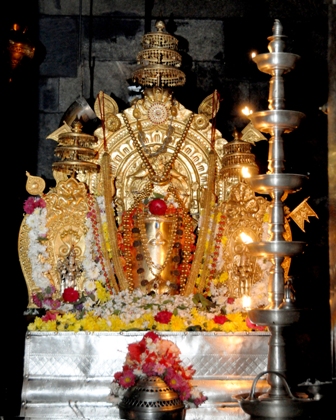
800 years ago, Dharmasthala was known as Kuduma in Mallarmadi, then a village in Belthangady. Here lived the Jain Bunt chieftain Birmanna Pergade and his wife Ammu Ballalthi in a house called Nelliadi Beedu. According to the legend, the guardian angels of Dharma assumed human forms and arrived at Pergade's abode in search of a place where Dharma was being practised and could be continued and propagated. As was their habit, the couple hosted these illustrious visitors with all their wherewithal and great respect. Pleased by their sincerity and generosity, that night the Dharma Daivas appeared in the dreams of Pergade. They explained the purpose of their visit to him and instructed him to vacate his house for the worship of the Daivas and dedicate his life to the propagation of Dharma. Asking no questions, the Pergade built himself another house and began worshiping the Daivas at Nelliadi Beedu.
This worship of daivas continues. The Dharma Daivas again appeared before Pergade to build separate shrines to consecrate the four Daivas — Kalarahu, Kalarkayi, Kumaraswamy and Kanyakumari. Also, Pergade was instructed to choose two persons of noble birth to act as the Daivas' oracles and four worthy persons to assist Pergade in his duties as the executive head of the shrines. In return, the Daivas promised Pergade protection for his family, abundance of charity and renowned for the 'Kshetra'. Pergade, as desired, built the shrines and invited Brahmin priests to perform the rituals. These priests requested Pergade to install a Shivalinga beside the native Daivas. The Daivas then sent their vassal Annappa Swamy to procure thelingam of Shiva from Kadri Manjunath Temple, near Mangalore. Subsequently, the Manjunatha temple was built around the linga.

Bahubali (English: one with strong arms) was the son of Rishabha (first tirthankara and founder of Jainism). Bahubali is a much revered figure among Jains. After winning the nonviolent duel with his elder brother, Bharata, he developed a desire for renunciation. He gave his kingdom to Bharata and became a Jain monk. Bahubali meditated motionless for a whole year in kayotsarga posture because of which climbers grew around his legs. After one year of meditation, he attained Kevala Jnana (omniscience) and became an arihant. A human being who destroys all inner passions like anger, attachment, greed and pride is revered as anarihant. According to Jain texts, he attained moksha at mount Kailasa and became a Siddhai.e., soul at its purest form (or a liberated soul). Bahubali is also called Gommatesh because of the statue dedicated to him. "Gommateshwara" statue, built by the Ganga dynasty minister and commander Chamundaraya, is a 57-foot (17 m) monolith (statue casted from a single piece of rock) and is situated above a hill in Shravanabelagola, in the Hassan district of Karnataka state, India. It was built in around 983 A.D. and is one of the largest free standing statues in the world. On August 5, 2007, the statue was voted by Indians as the first of Seven Wonders of India; 49% of the total votes went in favor of it.
Dudhsagar Water Falls

The magnificent Dudhsagar Waterfall is perched in the high peaks of the Western Ghats and is a sight to behold especially in the monsoons when it is in full and furious flow. From a distance, the waterfall appears like streams of milk rushing down the mountainside. The exhuberent and spectacular waterfall is located in the Sanguem taluka.
Measuring a mighty 600m from head to foot, this waterfall on the Goa-Karnataka border, attracts a steady stream of visitors from the coast into the rugged Western Ghats. After pouring across the Deccan plateau, the headwaters of the Mandovi River form a foaming torrent that splits into three streams to cascade down a near-vertical cliff face into a deep green pool.
The Konkani name for the falls, which literally translated means "sea of milk", derives from clouds of milky foam which rises up at the bottom of the falls. Dudhsagar is set amidst breathtaking scenery overlooking a steep, crescent-shaped head of a valley carpeted with pristine tropical forest, that is only accessible on foot or by train.
Like most places in Goa, the Dudhsagar waterfall too has a legend attached to its name. The legend tells the story of this powerful and wealthy king who ruled a kingdom in the Western Ghats. His lavish and opulent palace in the hills was surrounded by vast gardens which were full of deers and gazelles.
The King had a beautiful daughter, who used to enjoy taking a bath during the hot summers, in the picturesque lake near the forest on the edge of the King's palace grounds. It was her habit to finish her bath and have a jugful of sugared milk in a jug made of pure gold.
One day when she was finishing her usual jug of milk she found herself being watched by a handsome prince standing amongst the trees. Embarassed by her inadequate bathing attire, the resourceful Princess poured the sugared milk in front of her to form an improvised curtain to hide her body, while one of the maids rushed to cover her with a dress.
Thus was the legend born. The sugared milk (dudh) poured down the mountainside and continued to flow in torrents as a tribute to the everlasting virtue and modesty of the Princess of the Ghats. The Dudh Sagar (Sea of Milk) continues to flow to this day and attracts thousands of visitors to one of the most popular and famous tourist spots in the state of Goa.
A number of private operators offer special trips to the Waterfalls and the tours operated by GTDC (Goa Tourism Development Corpn) also have Dudhsagar Waterfalls as one of the tour stops.

The falls can also be reached by a train journey from Vasco or Margao. At Collem, in the Bhagwan Mahaveer Sanctuary near Mollem, there is a railway station where the train stops to pick up passengers for the journey to the waterfalls. There are two trains a day that stop at Dudhsagar Station and it's possible to catch a morning train up and spend several hours at the falls before taking an afternoon train back.
Near the top of the falls, the railway line from Vasco to Londa crosses the mountainside, with excellent views from the train. There also a couple of pools that you can swim in, making Dudhsagar a great place for a day full of fun and frolic. The alternate way of reaching the falls is only advisable between January and May, when the level of the water in the rivers abates enough to permit jeeps to approach the base of the falls.
Tuesday, 13 October 2015

Subscribe to:
Posts (Atom)